Categories
Info

PKR

Parti Keadilan Rakyat (PKR) — or the People’s Justice Party — emerged at the turn of the century as a response to political upheaval and demands for greater reform. Unlike UMNO or MCA, PKR’s story is rooted not in post-war independence struggles, but in the modern battle for justice, transparency, and democratic rights in Malaysia.

Fast Facts

  • Founded: 4 April 1999 (as Parti Keadilan Nasional; merged with Parti Rakyat Malaysia in 2003 to become PKR)
  • Founders: Datuk Seri Dr. Wan Azizah Wan Ismail, supporters of the Reformasi movement
  • Core Ideology: Social justice, multiracialism, reform
  • Slogan: Keadilan untuk Semua (“Justice for All”)
  • Key Achievements: Central to Malaysia’s first change of government in 2018; champion of democratic reforms

Origins: Born from the Reformasi Movement

  • Context: In 1998, Deputy Prime Minister Anwar Ibrahim was dismissed and later jailed on charges widely seen as politically motivated.
  • The spark: His removal triggered the Reformasi movement — a nationwide call for political reform, human rights, and an end to corruption.
  • Founding: Anwar’s supporters, led by his wife Dr. Wan Azizah Wan Ismail, formed Parti Keadilan Nasional to institutionalize Reformasi’s ideals.

Growth and Coalition Politics

  • 1999 general election: Despite massive street protests, the party struggled electorally, winning only a few seats.
  • 2003 merger: Parti Keadilan Nasional merged with Parti Rakyat Malaysia (PRM) to become Parti Keadilan Rakyat (PKR) — solidifying its multiracial identity.
  • 2008 political tsunami: PKR, as part of the opposition coalition, scored major victories, breaking Barisan Nasional’s (BN) two-thirds parliamentary majority for the first time since 1969.

Key Leaders Through History

LeaderTermHighlights
Datuk Seri Dr. Wan Azizah Wan Ismail1999–2018Founding president; symbol of the Reformasi struggle; first woman Deputy Prime Minister of Malaysia (2018–2020).
Dato’ Seri Anwar Ibrahim2018–PresentIcon of the Reformasi movement; long-time opposition leader; became Malaysia’s 10th Prime Minister in 2022.

2018: From Opposition to Power

  • Historic achievement: PKR, as a key member of the Pakatan Harapan coalition, helped end BN’s 61-year rule in the 2018 general election.
  • Government roles:
    • Anwar’s supporters filled important ministerial posts.
    • Dr. Wan Azizah became Malaysia’s first female Deputy Prime Minister.
  • Internal tensions: Post-election, PKR grappled with leadership disputes, particularly between factions aligned with Anwar and Azmin Ali, leading to eventual defections that triggered political instability in 2020 (“Sheraton Move”).

Challenges and Rebuilding

  • 2020 setback: The Sheraton Move led to Pakatan Harapan’s collapse and PKR’s removal from government.
  • 2022 general election: PKR, as part of Pakatan Harapan, returned to government in a Unity Governmentcoalition; Anwar was sworn in as Prime Minister.

PKR Today

  • Current position: Leading party in Malaysia’s Unity Government (2022–present).
  • Focus areas:
    • Economic reform and recovery.
    • Institutional reforms (anti-corruption, judicial independence).
    • Strengthening multiracial cooperation in a polarized political landscape.

Why PKR Matters

  • Unique appeal: PKR is one of the few major parties in Malaysia without an ethnic or religious base; it positions itself as a multiracial, reformist party.
  • Legacy: Transformed Malaysia’s political landscape by championing civil liberties, judicial reform, and anti-corruption efforts.
  • Future challenges:
    • Maintaining coalition unity.
    • Balancing idealism with political pragmatism.
    • Delivering meaningful reforms amid diverse expectations.
Categories
Info

MCA

MCA: The Party That Shaped Chinese Representation in Malaysia

The Malaysian Chinese Association (MCA) has been a central force in Malaysian politics since the early years of independence. As the main political voice for the Chinese community, MCA’s role has evolved from negotiating citizenship rights to navigating the complexities of Malaysia’s multiethnic democracy.

Fast Facts

  • Founded: 27 February 1949, Kuala Lumpur
  • Founding President: Tun Tan Cheng Lock
  • Core Ideology: Malaysian Chinese interests, multiculturalism, centrism
  • Slogan: Towards National Unity and Progress
  • Key Achievements: Co-founder of the Alliance Party, contributor to Malaysia’s independence and constitutional formation

Origins: Born from Post-War Uncertainty

  • Why MCA was created: To protect the rights and interests of the Chinese community in the face of post-World War II instability and British colonial reorganization efforts.
  • Founders: Led by Tun Tan Cheng Lock, MCA was formed to unify Chinese Malaysians, many of whom were threatened by uncertainty around citizenship status and the rise of communist insurgency.

Early Struggles and Alliance Politics

  • Citizenship negotiations: MCA played a critical role in negotiating citizenship terms for Chinese immigrants in the lead-up to Malaya’s independence.
  • Strategic move: Joined forces with UMNO and the Malayan Indian Congress (MIC) to form the Alliance Party — a coalition that presented a united front to the British in demanding self-governance.

Nation-Building Years: 1950s–1960s

  • Independence role: As a key partner in the Alliance, MCA helped secure Merdeka (independence) in 1957 and supported the drafting of the Federal Constitution.
  • Community focus: Concentrated on social welfare, education, and economic empowerment for Chinese Malaysians — including founding educational institutions and promoting Chinese-medium schools.
  • Internal divisions: Throughout the 1950s and 1960s, MCA faced tension between more conservative leaders and younger, more assertive factions demanding stronger Chinese rights.

Political Shifts After 1969

  • 1969 racial riots: MCA suffered heavy losses in the general election, exposing growing dissatisfaction among the Chinese electorate.
  • Response: A new generation of MCA leaders sought to strengthen the party’s voice in national policymaking, particularly over education and economic issues.
  • BN formation: Helped form the broader Barisan Nasional (BN) coalition in 1973, expanding beyond the original Alliance model.

Key Leaders Through History

LeaderTermHighlights
Tun Tan Cheng Lock1949–1958Founder; fought for citizenship rights for Chinese Malaysians; early advocate for multiracial cooperation.
Tun Dr. Lim Chong Eu1958–1959Left MCA after leadership disputes; later became Chief Minister of Penang under Gerakan.
Tun Tan Siew Sin1961–1974Strengthened MCA’s influence in government; served as Finance Minister; advocated economic policies benefiting all races.
Tan Sri Lee San Choon1974–1983Rebuilt MCA’s grassroots strength; led MCA to win the largest number of parliamentary seats for the party in 1982.
Tun Dr. Ling Liong Sik1986–2003Modernized MCA; expanded Chinese education initiatives; oversaw party during Malaysia’s economic boom.
Tun Dr. Chua Soi Lek2010–2013Attempted reforms but faced controversy; represented a shift toward addressing urban Chinese voters’ concerns.
Datuk Seri Dr. Wee Ka Siong2018–PresentLeading MCA through a rebuilding phase after BN’s 2018 defeat; focusing on recalibrating the party’s identity in a changed political landscape.

Decline and Current Struggles

  • Post-2008 challenges: The 2008 general election marked a significant drop in Chinese support for MCA, as urban voters shifted toward opposition parties like DAP.
  • 2018 collapse: Following the 1MDB scandal fallout, MCA — as part of BN — suffered its worst electoral defeat, retaining only a single parliamentary seat.
  • Repositioning efforts: MCA today is working to stay relevant through:
    • Focus on multicultural issues rather than only Chinese-specific concerns.
    • Strengthening its education and welfare services.
    • Rebuilding trust among urban and young voters.

MCA Today

  • Position: A junior partner in the Unity Government led by Pakatan Harapan (PH) and BN.
  • Focus areas:
    • Education (especially Chinese vernacular schools).
    • Socioeconomic development.
    • Upholding constitutional rights for all communities.

Why MCA Matters

  • Historical importance: MCA helped secure Chinese citizenship rights at independence and was instrumental in building Malaysia’s multiethnic coalition model.
  • Current relevance: Although diminished in strength, MCA remains a critical player in the evolving conversation about race, citizenship, and national identity in Malaysia.
Categories
Info

UMNO

The United Malays National Organisation (UMNO) is one of Malaysia’s oldest and most influential political parties. Founded in 1946, UMNO played a central role in securing independence and governing the country for over six decades. Its history mirrors Malaysia’s political evolution — from colonial resistance to modern coalition politics.

Fast Facts

  • Founded: 11 May 1946, Kuala Lumpur
  • Founding President: Dato’ Onn Ja’afar
  • Core Ideology: Malay nationalism, conservatism
  • Slogan: Bersatu, Bersetia, Berkhidmat (“United, Loyal, Serving”)
  • Key Achievements: Led Malaysia to independence (1957), dominant party in Barisan Nasional (BN) coalition (1973–2018)

Origins: The Birth of a Movement

  • Why UMNO was created: To oppose the Malayan Union proposal by the British, which threatened Malay sovereignty and diminished the powers of the Malay rulers.
  • Early impact: Mobilized mass Malay opposition, leading to the establishment of the Federation of Malaya(1948), a system that restored Malay privileges.

Path to Independence

  • Leadership transition: After Dato’ Onn Ja’afar left in 1951 (disagreements over opening UMNO to non-Malays), Tunku Abdul Rahman took over.
  • Strategic alliances: Formed the Alliance Party with the Malayan Chinese Association (MCA) and Malayan Indian Congress (MIC).
  • Key moment: Led negotiations with Britain that resulted in Merdeka (independence) on 31 August 1957.

Building Malaysia: 1957–1969

  • UMNO’s dominance: As leader of the Alliance Party, UMNO drove the creation of Malaysia (1963) and introduced the Federal Constitution, which protected Malay special rights under Article 153.
  • Challenges: Ethnic tensions boiled over in the 1969 racial riots, prompting a major political and economic recalibration.

The New Economic Policy (NEP) Era

  • What happened: In 1971, the government launched the NEP — a sweeping socio-economic program to uplift the Bumiputera (Malays and indigenous groups) and reduce economic disparities.
  • UMNO’s role: Central in implementing affirmative action policies that reshaped Malaysia’s economy and society.

Political Crises and Evolution

  • 1987 Split: UMNO fractured into “Team A” (Mahathir Mohamad) and “Team B” (Tengku Razaleigh Hamzah), leading to the deregistration of the original UMNO.
  • UMNO Baru (New UMNO): Re-registered under Mahathir’s leadership, becoming the main vehicle for Malay political power into the 1990s and early 2000s.

Decline and Repositioning

  • 2008 setback: Barisan Nasional (BN) lost its two-thirds majority for the first time.
  • 2018 shock defeat: BN, led by UMNO, lost federal power to Pakatan Harapan amid the 1MDB corruption scandal.
  • Comeback: Through political realignments post-2020, UMNO returned to government but with diminished strength.

UMNO Today

  • Current position: Part of the Unity Government (2022–present) led by Pakatan Harapan, a historic first.
  • Challenges:
    • Rebuilding trust post-scandal.
    • Appealing to a younger, multiethnic, reform-minded electorate.
    • Balancing Malay nationalist identity with Malaysia’s changing demographics.

Key Leaders Through History

LeaderTermHighlights
Dato’ Onn Ja’afar1946–1951Founder of UMNO; led opposition to the Malayan Union.
Tunku Abdul Rahman Putra Al-Haj1951–1971Led Malaysia to independence; promoted multiethnic cooperation through the Alliance Party.
Tun Abdul Razak Hussein1971–1976Introduced the New Economic Policy (NEP); focused on rural development and economic restructuring.
Tun Hussein Onn1976–1981Known as the “Father of Unity”; emphasized national integration and integrity.
Tun Dr. Mahathir Mohamad1981–2003Modernized Malaysia; longest-serving Prime Minister; oversaw rapid economic growth and industrialization.
Tun Abdullah Ahmad Badawi2003–2009Advocated for Islamic Hadhari (civilizational Islam) and anti-corruption; led BN to a landslide victory in 2004, but suffered setbacks in 2008.
Dato’ Sri Najib Razak2009–2018Oversaw major national transformation programs; leadership marred by the 1MDB scandal, leading to UMNO’s 2018 defeat.
Dato’ Seri Dr. Ahmad Zahid Hamidi2018–PresentLeading UMNO through a rebuilding phase; negotiated UMNO’s role within the current Unity Government.

Why UMNO Matters

  • Legacy: UMNO shaped Malaysia’s political foundations — independence, constitution, socio-economic structure.
  • Continuing influence: Despite electoral setbacks, it remains one of the most recognizable and organized political parties in Malaysia.
  • Future stakes: UMNO’s direction will heavily influence Malaysia’s political stability, ethnic relations, and development trajectory.

In Short

UMNO was born from a fight for Malay rights.
It grew to dominate Malaysia’s politics for 60+ years.
Today, it stands at a crossroads: to modernize or risk irrelevance.

Categories
News

Malaysia to Remove Egg Subsidy by August 1

What’s happening

The Malaysian government will fully discontinue its egg subsidy program starting August 1, 2025, ending long-standing price support measures for consumers and producers.

Why it matters

Eggs are a staple in Malaysian households, and the removal of subsidies could impact consumer prices and household food security—particularly among lower-income groups. The move signals the government’s confidence in a stabilised supply chain and production cost environment.

Details
  • Effective May 1, the current subsidy of RM0.10 per egg will be halved to RM0.05.
  • All price controls on eggs will be lifted in August.
  • The decision was made following improvements in production stability and cost management within the egg industry.
What they’re saying

“The industry has shown consistent supply and competitive pricing, especially during the recent Hari Raya Aidilfitri festive season,” said the Ministry of Agriculture and Food Security (KPKM) in a statement.
They added that the industry is committed to introducing special-grade eggs at affordable prices to offset market changes.

Between the lines

While the government steps back from direct price intervention, it plans to soften the impact by:

  • Expanding affordable access through initiatives like Agro Madani and Rahmah Sales, available at FAMA and LPP outlets nationwide.
  • Enhancing enforcement against profiteering and price manipulation via the Price Control and Anti-Profiteering Act 2011 (Akhap 2011).
What’s next

As August nears, the focus will shift to monitoring retail egg prices, ensuring consumer protection, and watching how the market adapts to the removal of subsidies.

Categories
News

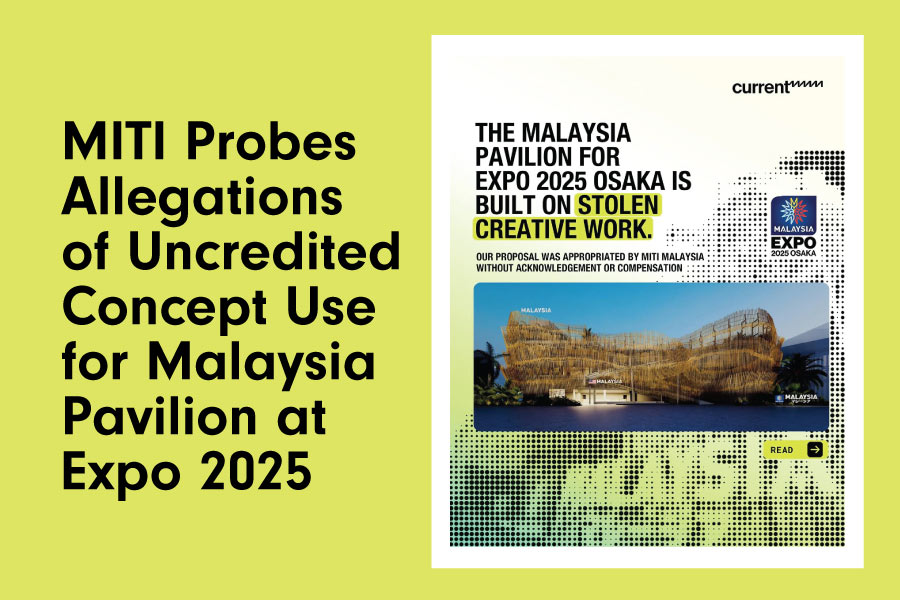
MITI Probes Allegations of Uncredited Concept Use for Malaysia Pavilion at Expo 2025

The Ministry of Investment, Trade and Industry (MITI) confirmed it is investigating claims circulating on social media alleging unauthorized use of a creative agency’s concept for the Malaysia Pavilion at Expo 2025 in Osaka, Japan, without appropriate credit or compensation.

These claims gained widespread attention following a viral Instagram post by user Fey Ilyas, prompting MITI’s swift response.

“MITI is currently undertaking a detailed investigation to gather and verify all pertinent facts concerning the allegations shared on social media,” the ministry stated briefly.

“We regard this matter with utmost seriousness and reserve all legal rights. MITI remains dedicated to maintaining the highest standards of integrity and compliance. We will take necessary legal actions if warranted,” the statement continued.

Although MITI did not explicitly name any individual or agency, Fey’s widely shared Instagram post—under the username @feythehuman—directly accused the government of adopting the agency’s concept, theme, narrative, and architectural vision for the Malaysia Pavilion without giving due credit or remuneration.

In his post, Fey detailed the substantial effort by his agency, stating they had “helped secure approvals, brought in world-class partners, and shaped the foundation” for Malaysia’s significant presence at the global expo.

“As a small company, even receiving proper acknowledgement for a project of this scale would have helped us build our reputation and open doors to new opportunities. Instead, our work was taken — used without credit or compensation,” Fey wrote.

He further alleged his agency faced pressure to remain silent, with implications that speaking out could jeopardize future business prospects.

“But what’s the point of future work if it’s built on silence, exploitation, and fear?,” Fey questioned. “We chose to speak up. Because dignity is worth more than access.”

Categories
News

Ayer Kuning By-Election: A Crucial Test for Malaysia’s Political Landscape​

The upcoming by-election in Ayer Kuning, Perak, scheduled for April 26, 2025, has garnered significant attention as it could influence the political dynamics within the state and potentially at the national level.​

Background

The by-election was necessitated by the untimely passing of incumbent assemblyman Ishsam Shahruddin of Barisan Nasional (BN) on February 22, 2025. Ishsam had secured the seat in the 2022 state elections with a majority of 2,213 votes.

Candidates

The by-election features a three-cornered contest:​

  • Dr. Mohamad Yusri Bakir (BN – UMNO): An Islamic education academic and Tapah UMNO Secretary. He aims to continue Ishsam’s legacy, focusing on educational development. ​
  • Abdul Muhaimin Malek (PN – PAS): The Tapah PAS chairman, representing Perikatan Nasional. His candidacy reflects PN’s strategy to strengthen its presence in Perak. ​
  • Bawani Kaniapan (PSM): A lawyer and PSM’s national deputy secretary-general. She previously contested the seat in 2022 and is backed by MUDA and PRM.
Campaign Highlights

The campaign period has been marked by several notable events:​

  • High Early Voter Turnout: Early voting on April 22 saw a turnout of 93.4% among police personnel and their spouses, indicating strong voter engagement. 
  • Asset Declaration Debate: While Bawani publicly declared her assets to promote transparency, Dr. Yusri declined to do so, stating he had already fulfilled necessary declarations upon his retirement from public service. 
  • Allegations of Misuse of Government Resources: Electoral reform group Bersih raised concerns over alleged abuses, including the use of government machinery and facilities during the campaign. ​
Demographics and Significance

The Ayer Kuning constituency comprises 31,897 registered voters, with a demographic breakdown of approximately 55.6% Malay, 22% Chinese, 14.3% Indian, and 8.1% others. ​

The by-election is viewed as a litmus test for the unity government formed by BN and Pakatan Harapan (PH), especially in gauging public support ahead of the next general election.​

Looking Ahead

As polling day approaches, all eyes are on Ayer Kuning to see which candidate will emerge victorious and what the results will signify for Malaysia’s evolving political landscape.​

Categories
News

U.S. Imposes 24% Tariff on Malaysian Imports Amid Global Trade Measures

Driving the news

On April 2, 2025, U.S. President Donald Trump announced a series of “reciprocal” tariffs targeting numerous countries, including a 24% tariff on Malaysian imports, effective April 9. This action is part of a broader strategy to address trade imbalances and protect domestic industries.

Why it matters

The newly imposed tariffs are poised to significantly impact Malaysia’s export-driven economy, particularly sectors heavily reliant on the U.S. market. Industries such as electronics, machinery, and medical devices may face increased costs and reduced competitiveness.

The big picture
  • Tariff Justification: The U.S. administration asserts that these tariffs are necessary to counteract what it perceives as unfair trade practices and to promote equitable trade relationships. ​
  • Global Scope: Malaysia is among several nations affected by these measures. Notably, China faces a 34% tariff, the European Union 20%, and Vietnam 46%.
  • Economic Implications: Analysts warn that such tariffs could disrupt global supply chains, elevate consumer prices, and potentially trigger retaliatory actions from affected countries. ​
Between the lines

The U.S. claims that Malaysia imposes a 47% tariff on American goods, justifying the 24% reciprocal tariff. This move underscores the administration’s focus on addressing perceived disparities in international trade policies. ​

What’s next

The Malaysian government and business community are expected to engage in discussions to assess the impact of these tariffs and explore potential responses. The situation remains fluid, with the possibility of negotiations or countermeasures in the coming weeks.​

Categories
News

PKR’s Upcoming Elections: A Defining Test for Malaysia’s Ruling Party

What’s happening

Malaysia’s Parti Keadilan Rakyat (PKR), the linchpin of the ruling coalition, is gearing up for its internal elections in May 2025, a contest that could shape the party’s direction—and the nation’s political future—as it navigates economic headwinds and a restless electorate. With a final list of candidates for its 222 branches nationwide set to drop Monday, the stakes are high for a party that’s been a standard-bearer for reform since its founding in 1999.

Why this matters

The internal polls are more than just party housekeeping — they’re a barometer of grassroots support, a test of internal unity, and a preview of how PKR might perform in the next general election.

Context to know
  • Leadership Watch: There’s speculation about whether top positions, including the presidency and deputy presidency, will be contested. Anwar has chosen to remain neutral, emphasizing the party’s democratic process.
  • Rule Changes: In 2024, PKR adopted key amendments, introducing ethnic and gender quotas, increasing delegate representation, and aiming for a more inclusive and transparent election.
  • Factional Undercurrents: Observers note strategic moves within party ranks. Leaders like Amirudin Shari are under the spotlight as internal alliances and rivalries subtly shape the road to May.
  • Reformasi Reloaded: PKR was born out of the 1998 reformasi movement, and its base still hungers for that spirit. Candidates like Ramanan are leaning hard into this narrative, but they’ll need to prove it’s more than rhetoric as voters grow skeptical of promises unfulfilled.
  • Coalition Dynamics: PKR’s dominance in the unity government isn’t guaranteed. A messy election could weaken Anwar’s hand, especially with coalition partners watching closely and opposition parties like Perikatan Nasional circling.
Behind the scenes

The party is juggling governance and grassroots politics — trying to maintain stability at the federal level while energizing its base and managing internal ambition.

What’s next

PKR’s May election will be closely watched for signals on its readiness for GE16, the strength of Anwar’s leadership, and how the party plans to sustain reformist momentum in government and beyond.

Categories
News

Proposed amendments to the Communications and Multimedia Act

Communications and Digital Minister Fahmi Fadzil today tabled proposed amendments to the Communications and Multimedia Act 1998 (Act 588) for its first reading in Parliament.

Among the key changes proposed in the Bill are amendments to Section 233, which include:

  • Introducing a new offence related to fraud and dishonesty against individuals.
  • Adding provisions for stricter penalties, including fines of up to RM500,000, imprisonment for up to two years, or both. An additional fine of RM5,000 per day may be imposed for each day the offence continues after conviction.
  • Increasing penalties for offences involving children under 18. These may include fines of up to RM500,000, imprisonment for up to five years, or both, with an additional fine of RM5,000 per day or part of a day that the offence persists after conviction.
  • Prohibiting the sending, authorising the sending, or causing the sending of unsolicited commercial electronic messages. Offenders could face fines of up to RM1,000,000, imprisonment for up to five years, or both, along with an additional RM10,000 fine per day or part of a day the offence continues after conviction.

The amendments also clarify the definition of offensive content under several categories:

  • Obscene Content: Material that provokes disgust through lewd portrayal, offends decency, or negatively influences the impressionable. For children, this includes child sexual grooming, pornography, sexual degradation, or depictions of sexual violence.
  • Indecent Content: Material deemed profane, improper, or contrary to social norms. Depictions of private parts for artistic, informational, or scientific purposes that are not grossly offensive are excluded.
  • False Content: Information that is untrue, misleading, incomplete, or fabricated. Satirical, parodic, or fictional content is not classified as false.
  • Menacing Content: Material that causes annoyance, threatens harm, incites criminal acts, or causes public disorder. For children, this includes content that leads to emotional disturbance, such as violent or suicidal portrayals, or encourages dangerous behaviour.
  • Grossly Offensive Content: Content that contains hate speech, expletives, or violence that offends large groups of people. Crude references and hate speech are included, while factual communication, good faith commentary, and ethical reporting are excluded.

Minister Fahmi Fadzil explained that the proposed amendments are designed to tackle the misuse of digital platforms and enhance protections, particularly for vulnerable groups such as children. The changes also include replacing the term “offensive” with “grossly offensive” and expanding the scope of offences to include fraud or dishonesty against individuals.

Categories
News

Azmin Ali appointed as Secretary-General while Rina appointed as Treasurer-General in Bersatu

Bersatu has unveiled the appointment of two senior leaders for the 2024-2027 term, with former Wanita Bersatu chief Rina Harun and former Putrajaya Umno deputy chief Tun Faisal Ismail Aziz taking on significant roles within the party.

Starting today, Rina Harun will serve as the party’s new treasurer-general, while Tun Faisal Ismail Aziz assumes the position of information chief.

Confirming earlier reports, Selangor Bersatu chairman Azmin Ali has also been appointed as the new secretary-general of the party.

Bersatu president Muhyiddin Yassin issued a statement, stating that these appointments were made in accordance with Article 13.9 of the party’s constitution.

“I am confident that they will carry out their responsibilities in line with the principles set out in the Bersatu constitution, with integrity, efficiency, and accountability,” he said.

Muhyiddin also expressed his appreciation to the outgoing office bearers – Salleh Bajuri (former treasurer-general), Razali Idris (former information chief), and Hamzah Zainudin (former secretary-general) – for their valuable contributions to the party.

It was previously reported that Rina Harun chose not to defend her position as Wanita Bersatu chief in the party elections held on November 2, with Mas Ermieyati Samsudin being elected unopposed for the role.

In a separate development, Azmin Ali was initially reported to have declined Muhyiddin’s offer for the secretary-general position, citing his commitment to leading Selangor Perikatan Nasional and focusing on capturing the state in the upcoming elections.

Azmin did not participate in the recent Bersatu party elections, amid speculation that he would take over from Hamzah Zainudin as the new secretary-general.

Muhyiddin Yassin retained the presidency of Bersatu uncontested in the party polls, while Hamzah Zainudin was also unchallenged in his bid for deputy president.